-
 Why Do Ultrasonic Cleaners Have Temperature Control? The Science Behind the Heat
If you've shopped for or used an ultrasonic cleaner, you've likely noticed that many models come with a built-in heating function and a temperature control setting. This might lead you to wonder: if the cleaning power comes from ultrasonic waves,
-
 Common temperature control methods of ultrasonic cleaning machine manufacturers!
Ultrasonic cleaning machines generally have timing or heating functions. We have introduced several common timing configurations of p-series ultrasonic cleaning machines. Today we will introduce some more common heating configurations, hope that this arti
-
 What is the working temperature control range of the ultrasonic cleaning machine? Can you use it 24 hours a day?
When the ultrasonic cleaning machine removes oil, the different workpiece has different cleaning temperature. To what extent is the temperature controlled when the ultrasonic cleaning machine removes oil? Ultrasonic cleaning machine cleaning effect is und
-
 How to Adjust Temperature on Ultrasonic Cleaners: A Complete Guide
Studies show that proper temperature control can improve cleaning efficiency by up to 40% and extend equipment life by 2-3 years. This guide will walk you through the steps to master temperature adjustment on your ultrasonic cleaner. 1. Understanding T
-
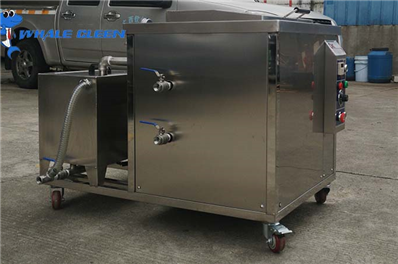 Analysis of small ultrasonic cleaning machine
The internal structure of a small ultrasonic cleaning machine: 1, cleaning tank: holding the workpiece to be washed, made of stainless steel, can be installed heating and temperature control device. And in general, the bottom of the sink is an Ultr
-
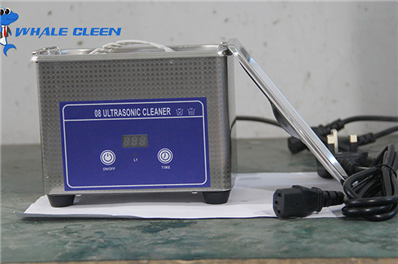 Optimizing Ultrasonic Cleaning Time: Factors and Best Practices
Ultrasonic cleaning machines have become indispensable tools in various industries for efficiently and thoroughly cleaning a wide range of items. The cleaning time required for ultrasonic cleaning machines can vary based on several factors, each of which
-
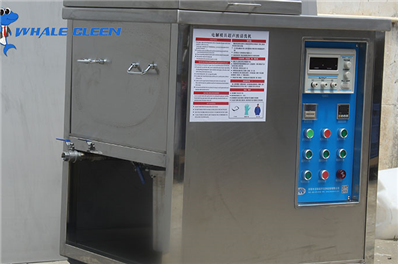 Ultrasonic Cleaning Machines: Enhancing Metal Parts Quality and Performance
Cleaning metal parts is an essential process to enhance their quality and performance. One effective method for achieving this is by utilizing ultrasonic cleaning machines. These machines utilize the power of ultrasonic waves to remove oil, dirt, and part
-
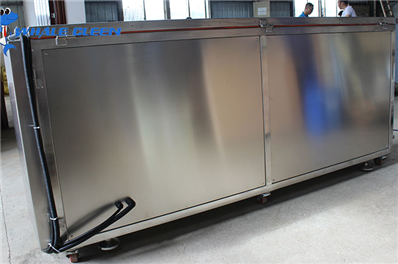 Advancements in Ultrasonic Cleaning Technology: Enhancing Efficiency and Effectiveness
Ultrasonic cleaning technology has undergone significant innovations in recent years, leading to improved performance and enhanced cleaning capabilities. This article explores the advancements in ultrasonic cleaning technology, highlighting key innovation
-
 How to Thoroughly Remove Micro‑Pore Contaminants in Hydraulic Components? This Ultrasonic Equipment Has Become the Industry Standard
In hydraulic system manufacturing, there is a scenario that plays out repeatedly in quality inspection rooms: A valve body passes every dimensional check, assembles perfectly, and ships to the customer. Then, after a few hundred operating hours, the syste
-
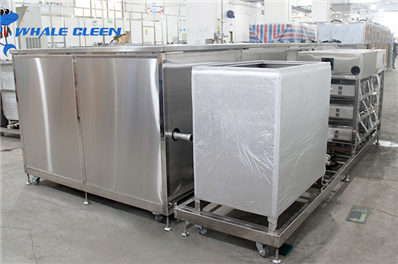 The Same Circuit Board, Different Results: Why Leading Electronics Manufacturers Are Switching to Industrial Ultrasonic Automatic Cleaning Machines
Look at the two PCBs. The first was cleaned with a manual brush and solvent dip. The second came from a fully automated ultrasonic cleaning line. To the naked eye, they look identical—solder joints shining, surfaces spotless, ready for assembly. But un
-
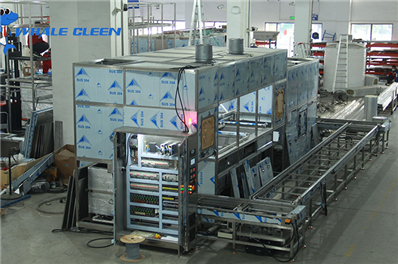 Fuel Nozzle Deep Degreasing Challenge: How Ultrasonic Cleaning Machines Remove Internal Deposits
Fuel nozzles are among the most precision-critical components in any engine—whether for diesel rail systems, gasoline direct injection, or gas turbines. Over their service life, three distinct contaminants accumulate inside the nozzle structure:Coked carb
-
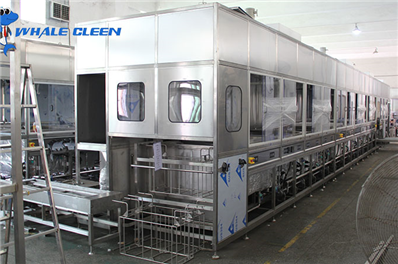 Precision Metal Stamping Parts Cleaning: Key Ultrasonic Equipment Selection Points — Why Whale Cleen Delivers Consistent, Damage‑Free Results
In high‑volume metal stamping production, cleaning is a process that is often underestimated—until it becomes the bottleneck. Stamped parts emerge from the press coated with heavy stamping oil, microscopic metal fines, and occasionally coolant residues. L